
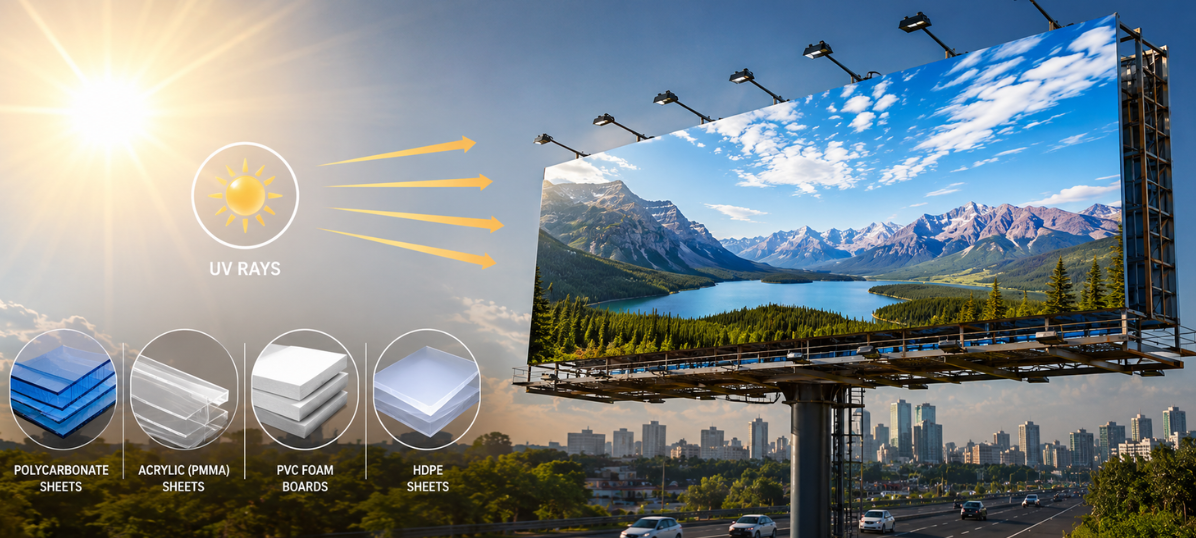
Outdoor signage plays a vital role in branding, navigation, and communication. Whether it is a storefront display, roadside billboard, or directional sign, outdoor signage remains continuously exposed to sunlight and varying weather conditions. Among all the factors that determine the durability and performance of signage materials, UV resistance is one of the most critical.
UV resistance refers to a material’s ability to withstand damage caused by ultraviolet (UV) radiation from the sun. Although UV rays are invisible to the human eye, they can significantly degrade materials over time. When signage materials lack adequate UV resistance, they may begin to fade, crack, warp, or become brittle after prolonged exposure to sunlight.
1. Prevents Colour Fading
Clear and vibrant visuals are essential for effective signage. Continuous exposure to UV rays can cause colours to fade rapidly, making signs appear dull, unattractive, and difficult to read. Materials with high UV resistance retain their colour and visual appeal for a longer period, ensuring that the signage remains impactful and easily visible.
2. Enhances Product Lifespan
Outdoor signage is a long-term investment for businesses. Materials that are not UV resistant tend to deteriorate quickly, resulting in frequent repairs or replacements. UV-resistant materials help extend the lifespan of signage, reducing long-term operational and replacement costs.
3. Maintains Structural Integrity
UV radiation affects not only the appearance of signage but also its structural strength. Prolonged exposure can weaken materials, making them brittle and more susceptible to cracking or breakage. UV-resistant materials maintain their durability and structural stability even under harsh environmental conditions.
4. Reduces Maintenance Costs
Signage that fades, cracks, or deteriorates requires regular maintenance and replacement. By choosing UV-resistant materials, businesses can significantly reduce maintenance expenses while ensuring consistent performance and appearance over time.
Several materials are widely preferred for outdoor signage due to their superior UV resistance and durability, including:
To further improve performance, manufacturers frequently incorporate UV stabilisers and protective coatings into these materials.
Studies have shown that untreated plastics exposed to continuous sunlight can lose up to 50% of their original strength within a year. This highlights the importance of selecting materials specifically designed for outdoor applications. UV protection is not simply an added advantage; it is an essential requirement for long-term outdoor signage performance.
UV resistance is one of the most important factors to consider when selecting materials for outdoor signage. It directly influences the durability, appearance, structural integrity, and cost-effectiveness of the signage. Choosing the right UV-resistant material ensures that signage remains visually appealing, strong, and reliable for years to come.
For businesses seeking dependable and high-performance outdoor signage materials, Khanna Plastics offers industry expertise and quality solutions tailored to long-term outdoor applications.