
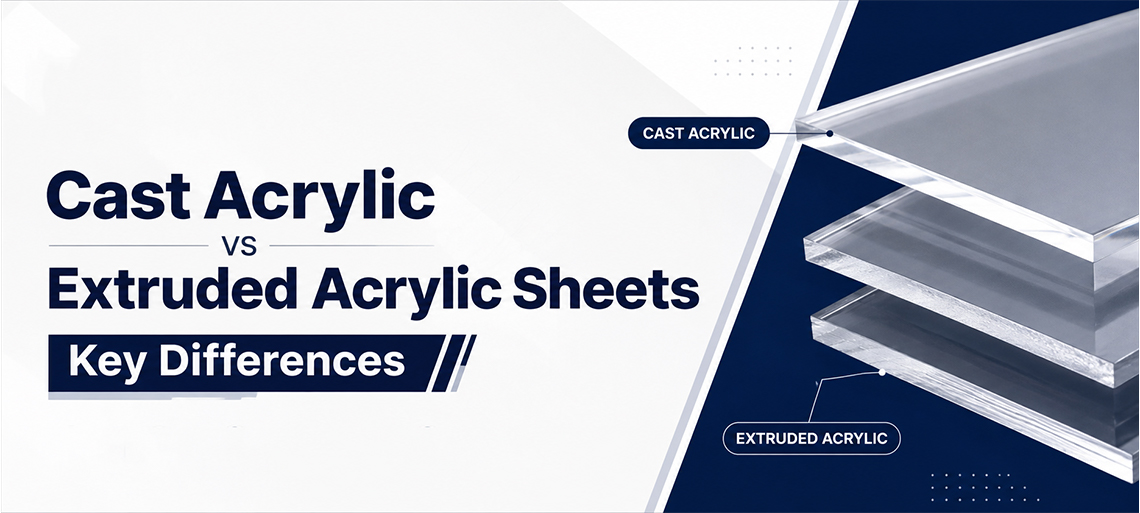
Acrylic sheets are widely used in industries such as construction, retail displays, signage, automotive, furniture, medical equipment, and interior design. However, selecting the right acrylic sheet depends on understanding how it is manufactured and how it performs in different applications. The two most common types are cast acrylic sheets and extruded acrylic sheets. Although both are made from polymethyl methacrylate (PMMA), their manufacturing process creates noticeable differences in strength, clarity, machining, chemical resistance, and cost.
Cast acrylic sheets are produced by pouring liquid acrylic resin between two glass plates, where it hardens into a solid sheet. This process creates a high-quality acrylic sheet with excellent optical clarity and consistent surface finish. Since the material experiences lower internal stress, it offers better durability during cutting, drilling, engraving, and polishing. Cast acrylic sheets also provide higher resistance to chemicals and environmental exposure, making them suitable for premium industrial and architectural applications.
Extruded acrylic sheets are manufactured by pushing melted acrylic material through a die to create continuous sheets of uniform thickness. This production method is faster, making the acrylic sheet more economical for large-scale manufacturing. Extruded acrylic sheets are easier to thermoform because they soften at lower temperatures. However, they generally have higher internal stress, making them slightly less suitable for precision machining compared to cast acrylic sheets.
The biggest difference lies in the manufacturing process. A cast acrylic sheet offers superior optical quality, better thickness consistency across custom sizes, excellent scratch resistance, and improved performance during fabrication. It is preferred for applications requiring high precision, laser engraving, premium displays, and long-term outdoor use.
An extruded acrylic sheet, on the other hand, provides consistent production, lower manufacturing costs, and better suitability for vacuum forming and bending. It is commonly selected for protective barriers, standard glazing, retail fixtures, and projects where cost efficiency is a priority.
Another important factor is chemical resistance. Cast acrylic sheets generally withstand solvents and cleaning chemicals more effectively, while extruded acrylic sheets may develop stress cracks under certain chemical exposure. Clear acrylic can offer light transmission of around 92%, although the exact value varies by thickness, grade, and manufacturer.
The right acrylic sheet depends on the intended application. If your project requires premium finish, long service life, detailed machining, or superior chemical resistance, cast acrylic sheets are usually the better option. If affordability, easy thermoforming, and high-volume production are the main priorities, extruded acrylic sheets deliver reliable performance while reducing manufacturing costs.
Understanding these differences helps manufacturers, designers, and fabricators choose the most suitable acrylic sheet for performance, durability, and overall project efficiency.
Choosing between cast and extruded acrylic sheets should always depend on technical requirements, fabrication methods, and application goals rather than price alone. For businesses looking to understand different acrylic sheet solutions and industry applications, Khanna Plastics provides valuable insights into modern plastic material technologies.
1. Which acrylic sheet is stronger, cast or extruded?
Cast acrylic sheets are generally stronger for machining and fabrication because they have lower internal stress, better chemical resistance, and improved durability compared to extruded acrylic sheets.
2. Which acrylic sheet is better for laser cutting?
Cast acrylic sheets are preferred for laser cutting because they produce cleaner edges, polished finishes, and better engraving quality with minimal internal stress during processing.
3. Are cast and extruded acrylic sheets equally transparent?
Yes. Both cast and extruded acrylic sheets offer excellent optical clarity with light transmission of about 92%, making them suitable for displays, glazing, and signage applications.
4. Why are extruded acrylic sheets less expensive?
Extruded acrylic sheets are produced using a continuous manufacturing process that reduces production time, material waste, and overall manufacturing costs, making them more economical for large-volume applications.
5. Which acrylic sheet is better for outdoor applications?
Cast acrylic sheets are generally preferred for outdoor applications because they provide better weather resistance, chemical resistance, long-term durability, and maintain their appearance under prolonged environmental exposure.