
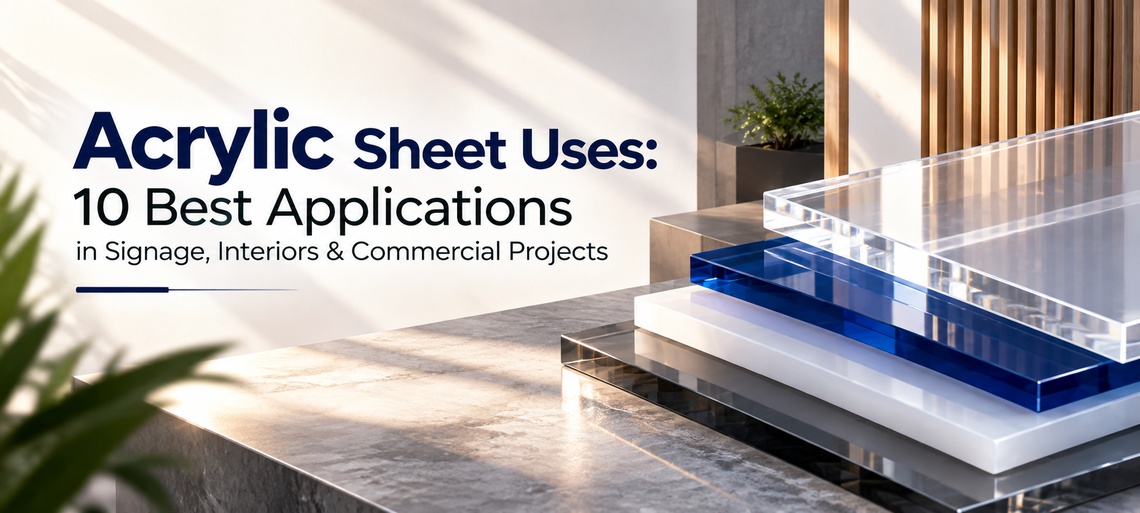
Acrylic sheets have become a practical choice for projects where appearance, flexibility and easy fabrication matter. Also known as PMMA or acrylic glass, the material combines glass-like clarity with comparatively low weight and can be cut, polished, printed, engraved or shaped for different requirements. This makes acrylic sheet uses especially diverse across signage, retail, offices, hospitality and interior design. From illuminated brand boards and reception logos to partitions, furniture components and display units, acrylic can serve both decorative and functional purposes. For businesses planning a new commercial space or custom display, understanding these applications can help in selecting the right sheet type, thickness, colour and finish.
1. Illuminated Signage
One of the most common acrylic sheet uses is illuminated signage. Clear, translucent and coloured sheets can be combined with LED lighting to create bright, attractive signs for shops, restaurants, offices and commercial buildings. Acrylic is also suitable for light boxes, logo panels and channel-letter applications.
2. Corporate and Reception Signage
Acrylic gives reception areas a clean and professional appearance. Businesses can use it for:
Laser cutting, printing and engraving allow businesses to create customised designs.
3. Retail Displays and POP Units
Retailers use acrylic sheets to present products without visually blocking them. Transparent material can make merchandise easier to see while maintaining a neat display. Common applications include countertop stands, brochure holders, cosmetic displays, product risers and point-of-purchase units.
4. Interior Partitions and Privacy Screens
Frosted, translucent and coloured acrylic can be used for partitions in offices, salons, restaurants and other commercial interiors. These panels can separate areas while allowing designers to maintain a lighter visual appearance than many conventional solid partitions.
5. Furniture and Decorative Elements
Acrylic sheets can be incorporated into tables, shelves, cabinet components and decorative furniture. Clear acrylic can create a floating effect, while coloured and mirror finishes can add a stronger design element. Interior designers also use acrylic for feature panels and decorative installations.
6. LED Lighting Diffusers
Another important application is lighting. Diffuser-grade acrylic can help distribute LED illumination across panels and fixtures. It is used in light boxes, decorative lighting, ceiling features and illuminated architectural elements where controlled light diffusion is required.
7. Wall Panels and Interior Cladding
Acrylic can be used as a decorative wall covering in retail stores, offices, hospitality spaces and showrooms. Glossy, matte, textured, coloured or patterned finishes allow designers to match the material with a project's visual theme.
8. Wayfinding and Directional Signage
Large commercial buildings need clear navigation systems. Acrylic is suitable for directional signs, floor indicators, department boards and information panels. Its smooth surface also works well with printed graphics and applied lettering.
9. Exhibition and Display Stands
Exhibitions demand materials that are easy to customise and transport. Acrylic sheets can be fabricated into display stands, product holders, information panels and branded exhibition elements. Their clean appearance helps products remain the visual focus.
10. Protective Screens and Covers
Acrylic is also used for protective barriers, covers and viewing panels. Depending on the application and required performance, it can be incorporated into reception screens, machine viewing windows and protective enclosures. Industrial users should select the appropriate grade and thickness for the operating environment.
The popularity of acrylic comes from the combination of appearance and fabrication flexibility. Key advantages include:
| Feature | Project Benefit |
| Lightweight construction | Easier handling and installation |
| Optical clarity | Suitable for displays and visual branding |
| Multiple colours and finishes | Greater design flexibility |
| Easy fabrication | Can be cut, drilled, engraved and polished |
| Light transmission | Useful for illuminated signage and diffusers |
| Customisation | Supports different shapes and design requirements |
The right specification still depends on the application, installation method, environment and required finish. Thickness and material type should be selected according to the project's actual performance requirements.
Before purchasing, consider:
The wide range of acrylic sheet uses makes this material suitable for signage, retail displays, interiors, lighting and commercial fabrication. Its combination of visual appeal, lightweight construction and fabrication flexibility allows designers and businesses to create practical as well as distinctive solutions. Khanna Plastics can help businesses, designers and fabricators identify suitable acrylic sheet options according to their project requirements.
Looking for acrylic sheets for your next signage, interior or commercial project? Contact Khanna Plastics to discuss your material requirements and application.
1. What are the most common acrylic sheet uses?
Common applications include illuminated signage, reception branding, retail displays, partitions, furniture components, lighting diffusers, wall panels, exhibition stands and protective screens.
2. Are acrylic sheets suitable for signage?
Yes. Acrylic is widely used for illuminated signs, logo panels, directional boards, reception signs and other branding applications because it offers a clean finish and fabrication flexibility.
3. Can acrylic sheets be used for interior design?
Yes. Designers use acrylic for partitions, furniture components, wall panels, decorative features, lighting elements and branded interior installations.
4. Can acrylic sheets be customised?
Acrylic can generally be cut, drilled, engraved, polished, printed and fabricated into different shapes. The appropriate processing method depends on the sheet and project requirements.
5. How do I choose the right acrylic sheet?
Consider the application, thickness, colour, finish, lighting requirements, fabrication method and installation environment before selecting the sheet.