
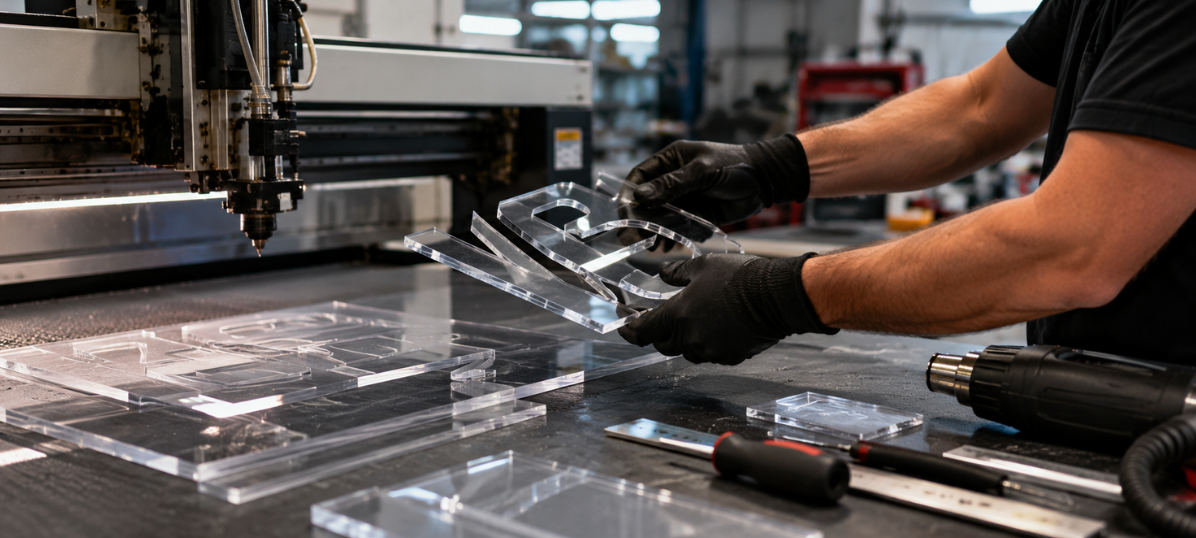
A-cast acrylic is widely used in the signage industry due to its exceptional clarity, durability, and premium finish. Whether utilised for retail displays, corporate branding, or decorative signage, it offers a sleek and professional appearance that enhances visual appeal. Understanding the fabrication process is essential for achieving precision, maintaining quality standards, and reducing production errors.
A-cast acrylic is manufactured by pouring liquid acrylic into moulds, resulting in a more uniform molecular structure compared to extruded acrylic sheets. This manufacturing process improves its optical clarity, strength, and fabrication capabilities. A-cast acrylic is easier to cut, engrave, polish, and shape, making it highly suitable for detailed signage applications.
Additionally, it offers excellent resistance to chemicals, weather conditions, and cracking, making it a preferred choice for long-lasting indoor and outdoor signage solutions.
The fabrication process begins with creating a detailed and accurate design. This stage involves selecting the appropriate dimensions, sheet thickness, colours, finishes, and overall layout of the sign.
Designers typically use vector-based software to prepare precise digital artwork. A well-planned design ensures accuracy during fabrication, minimises material wastage, and improves the overall production efficiency.
Proper planning at this stage also helps in determining the most suitable fabrication techniques for the project requirements.
Once the design is finalised, the acrylic sheet is cut into the required shape and dimensions. Laser cutting is one of the most commonly used methods because it delivers clean edges, smooth finishes, and high precision.
For thicker acrylic sheets or large-scale signage projects, CNC routing may also be used. Both methods ensure accurate cuts while preserving the structural integrity of the material.
Precision during the cutting stage is essential, as it directly affects the final appearance and assembly of the sign.
After cutting, the signage may require branding elements such as text, logos, graphics, or decorative patterns. These details can be added using engraving or UV printing techniques.
Engraving creates a refined and permanent etched effect on the acrylic surface, while UV printing produces vibrant, detailed, and full-colour graphics. The choice between the two depends on the desired aesthetic and functional requirements of the signage.
Both techniques contribute significantly to the visual impact and professional appearance of the final product.
Raw acrylic edges may appear rough or unfinished after cutting, making edge finishing an important part of the fabrication process. Polishing enhances the edges, giving them a smooth, glossy, and glass-like finish.
Common polishing methods include flame polishing and diamond polishing. These techniques improve not only the visual appeal of the signage but also its overall quality and premium appearance.
Well-polished edges contribute to a clean and sophisticated final product.
One of the major advantages of A-cast acrylic is its excellent thermoforming capability. The material can be heated and bent into various shapes to create curved, dimensional, or custom-designed signage.
Controlled heating is essential during this process to prevent bubbling, distortion, or material damage. Proper shaping techniques allow manufacturers to create innovative and visually striking signage solutions.
This flexibility makes A-cast acrylic highly suitable for modern and creative signage applications.
The final stage involves assembling the fabricated components and preparing the sign for installation. Depending on the design and installation environment, mounting methods may include adhesives, screws, brackets, or standoff systems.
Proper alignment and secure installation are critical to ensuring durability, stability, and a professional finish. Careful handling during installation also helps maintain the quality and appearance of the acrylic surface.
A-cast acrylic offers several advantages over other signage materials. It provides superior optical clarity, enhanced durability, and excellent fabrication flexibility. The material supports intricate detailing and precision work, making it ideal for contemporary signage applications.
Its resistance to weathering, chemicals, and cracking makes it suitable for both indoor and outdoor environments. Additionally, its premium appearance and long-term performance make it a cost-effective investment for businesses seeking durable and visually appealing signage solutions.
Fabricating signage with A-cast acrylic involves a detailed process that includes designing, cutting, engraving, polishing, shaping, and installation. Each stage plays a vital role in ensuring a professional-quality result that is visually appealing, durable, and long-lasting.
For businesses seeking reliable and high-quality acrylic materials for signage applications, Khanna Plastics offers premium acrylic solutions suitable for a wide range of fabrication and signage requirements.